Caring Without Disappearing: The Hard Parts of Caring for a Parent When Closeness Isn't There
Nobody says it out loud in the waiting room, but plenty of people say it in my office: I don't actually like my mother. And now she needs me.
If that sentence lives somewhere in you, you're not broken, and you're not a bad son or daughter. You're part of the largest, quietest caregiving wave in American history — and the research on what you're experiencing is clearer than you might expect.
The dutiful call
For the sake of conciseness, I am referring to any parent but will use the pronoun her or noun mom.
Here's a moment I hear about constantly. An adult child — successful, capable, exhausted — tells me, "I owe her a call." Not "I want to call her." Owe. The call happens on schedule. The parent talks about her ailments. The adult child absorbs it, hangs up, and feels drained for the rest of the day.
That word — owe — is doing a lot of work. It tells me the relationship is running on obligation instead of connection. A connection says: I get you, I want to know you, I can sit with you in what you're feeling. A transaction says: you owe me. One builds safety. The other builds a debt that never gets paid off.
What the research actually says
For a long time, we assumed caregiver burnout came from the tasks — the driving, the doctor visits, the phone calls, the logistics. The research says otherwise.
It's the relationship, not the labor. Studies of family caregivers have found that the quality of the prior relationship between caregiver and care recipient predicts caregiver burden — and that burden is the pathway to distress. In one study of people caring for frail older relatives, resentment toward the caregiving role was the single independent predictor of anxiety and depressive symptoms. Not hours spent. Not severity of illness. Resentment — which earlier research had already tied to a history of poor interpersonal relationships between the two people.
Read that again: the thing making caregivers sick isn't the caregiving. It's caring for someone who hurt you, dismissed you, or never really saw you.
Obligation alone protects you from nothing. Gerontology research distinguishes between caregivers who show up from intrinsic motives — genuine affection and commitment — and those who show up from obligation or a sense of having no choice. The intrinsically motivated group copes better, adjusts, and even finds meaning. The obligation-only group struggles, fixates on what the role costs them, and reports more strain in the rest of their family life. A cross-cultural meta-analysis found something striking: warmth-based devotion toward a parent was associated with less caregiver burden, but a bare sense of duty showed no protective effect at all. Duty without warmth buys you nothing.
"I love her/him and I can't stand her/him" has a name. Researchers call it intergenerational ambivalence — holding strong positive and strong negative feelings toward a parent at the same time. It's not a character flaw; it's one of the most-studied dynamics in family gerontology. And it has consequences: a large national study following adults over a decade found that ambivalence in the parent–adult child relationship predicted greater loneliness down the road, which in turn predicted depression and lower life satisfaction. Living in that push-pull — I should call her / I dread calling her — is not neutral. It costs you.
Aging pulls people back into relationships they left. Research on family estrangement out of Ohio State found that most estrangements from parents are temporary — and one likely reason is caregiving itself. When a parent begins to decline, adult children feel responsible, and the distance they fought to create collapses. If you cut contact years ago and now find yourself managing prescriptions for that same parent, you are living exactly this pattern.
And when the history includes real harm, the math gets harder. Data from a decades-long Wisconsin study found that adults who experienced childhood abuse by a mother and later became her caregiver showed reduced emotional closeness — and that reduced closeness was linked to more depressive symptoms in the caregiver. Caring for the person who hurt you is a documented risk factor for depression. That deserves to be said plainly, because so many people carry it as a private shame.
Why this generation, why now
The generational math is unforgiving. Roughly seven in ten middle-aged Americans are now caring in both directions — for children and for aging parents — spending, by one survey, an average of 37 hours a week on it. That's a second full-time job. Nearly half of Gen X adults say they're not emotionally prepared to care for their parents. And fewer than four in ten families have even had the conversation about what care will look like.
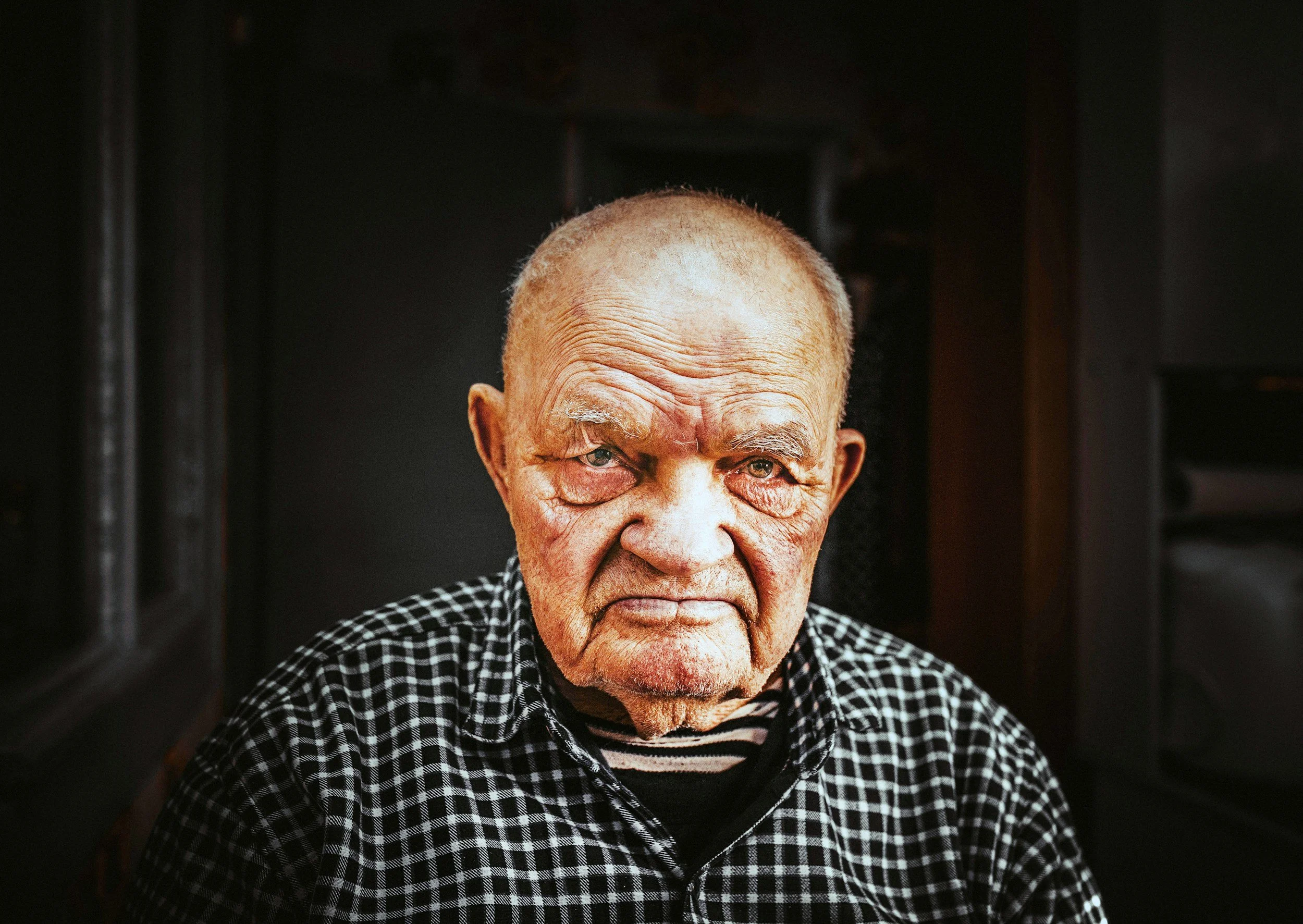
There's also a values gap the research has quietly documented. Studies of the boomer generation's family ties show they place high value on the exchange of support — giving help, receiving help, especially financially. Their Gen X children, by contrast, value harmony with parents more than support exchange. One generation is asking for transactions. The next generation is starving for peace. When those two systems collide over a hospital bed, both sides feel cheated.
And the long-running Longitudinal Study of Generations — which has followed the same families since 1971 — found what many of you already know in your body: when the early parent–child relationship was poor, the caregiving relationship decades later inherits that weakness. The account was overdrawn before the caregiving ever started.
Grieving someone who's still alive
Here's the piece almost nobody names. Much of what you're feeling isn't just anger or dread. It's grief.
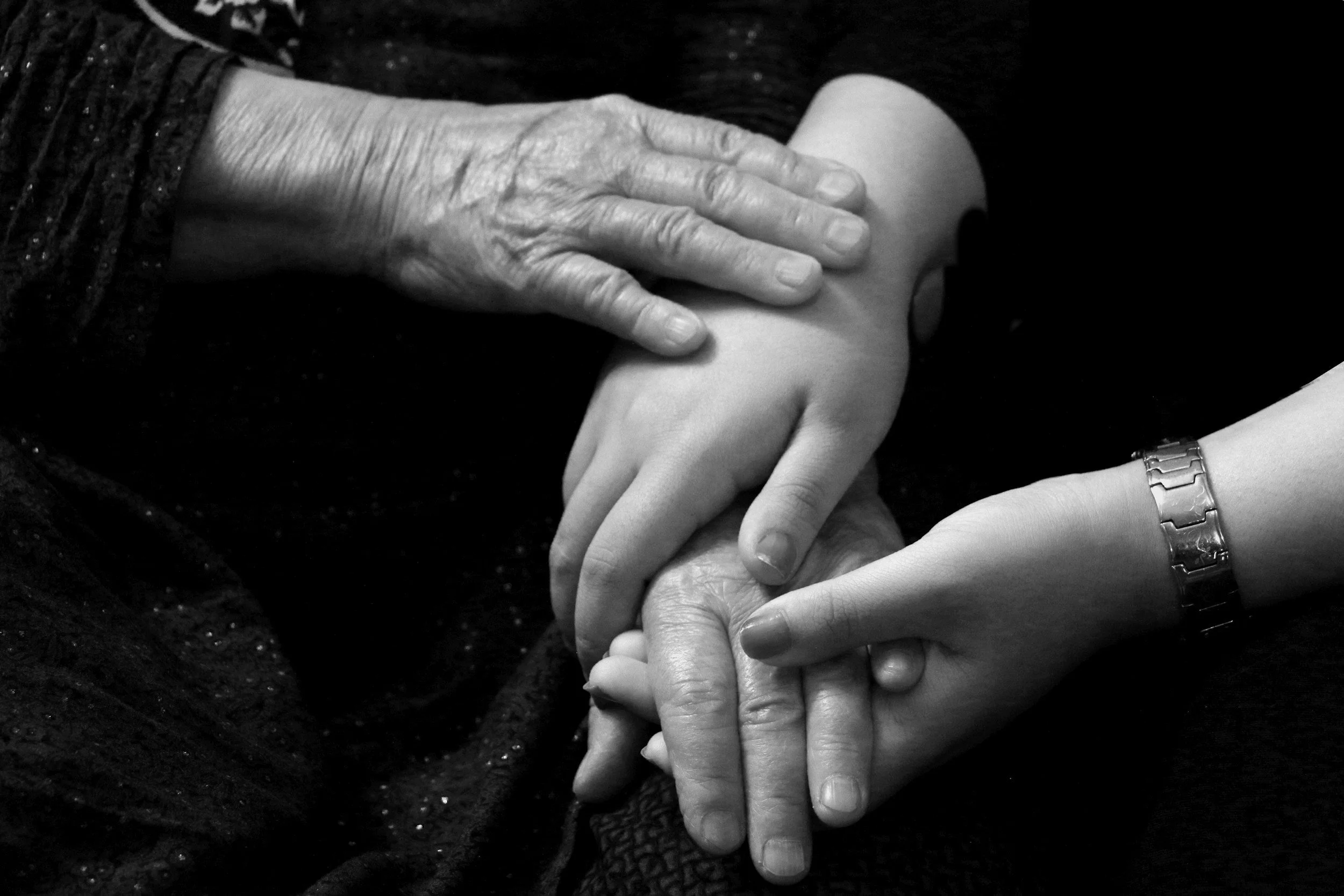
Family researcher Pauline Boss coined the term ambiguous loss for exactly this: a person who is physically present but emotionally unavailable — or the loss of the relationship you needed but never got. There's no funeral for the mother who couldn't attune to you. No casserole brigade shows up when you realize your father will never be curious about who you are. The loss has no ending, so the grief has no container. It just recirculates — often as guilt, resentment, and those crying spells that seem to come out of nowhere.
If you've ever left a visit with your parent feeling inexplicably heavy, you weren't being dramatic. You were mourning.
What you can actually do
You cannot make your parent into someone who sees you. But the research points toward what helps, and it's not "try harder to feel grateful."
1. Name the FOG. Fear, obligation, guilt — when a relationship runs on these three fuels, everything feels cloudy. You can't tell what's real, what's yours, what's theirs. The first step is simply recognizing which of the three is driving any given interaction. Obligation says I have to call. Guilt says I'm terrible if I don't. Fear says if I set a limit, something bad happens. Naming it doesn't fix it, but it turns the fog into weather you can navigate.
2. Do the honest cost accounting. Staying in obligation feels cheaper than change — one phone call, one visit, keep the peace. But the research above shows the real price: chronic resentment, and resentment is the strongest predictor of anxiety and depression in caregivers. Changing the pattern costs more up front — hard conversations, discomfort, maybe conflict — but it's a one-time construction cost instead of rent you pay forever.
3. Engineer the contact instead of enduring it. You don't have to choose between total obligation and total estrangement. Structure the middle. Decide in advance what a call or visit will look like: how long, what topics, what your exit line is when it drifts into the old pattern. Ask for what you need instead of complaining about what you don't like — "Next time we talk, let's start with what's good in our lives" is a boundary wearing kind clothes. You're not being controlling. You're doing what your parent cannot do: thinking about how the interaction lands on the other person.
4. Separate caregiving from closeness. The estrangement research is clear that caregiving and boundaries can coexist. You can coordinate with a care team without being the daily emotional sponge. You can attend the appointment and skip the two-hour ailment recital. Involvement is a dial, not a switch.
5. Grieve on purpose. Give the ambiguous loss a name and a place. The parent you needed didn't show up — that's a real loss, and it deserves real mourning, not another round of maybe if I try harder. Grieving the parent you didn't get is often what finally makes it possible to deal calmly with the parent you have.
6. Recharge before contact, debrief after. If you know a visit drains your battery, treat it like the taxing event it is. Regulate your nervous system beforehand. Plan something restorative after. This isn't indulgence; it's maintenance on the only vehicle making these trips.
The bottom line
You can be a decent person and dread your mother's phone calls. You can show up for a father's surgery and still be angry about your childhood. The research doesn't just permit that complexity — it documents it in tens of thousands of families.
What it warns against is only one thing: running indefinitely on pure obligation, pretending the resentment isn't there. That's the pattern with the measurable cost.
The way through isn't becoming a better martyr. It's becoming an honest accountant — of what this relationship costs, what you actually owe, and what you're finally allowed to keep for yourself.
If this hits close to home, the companion working page walks you through the FOG check, the cost accounting, and how to engineer your next contact, step by step.
Research touchstones for the curious: work on caregiver relationship quality and burden (Zarit and colleagues); resentment and caregiver mental health (Williamson & Shaffer); intergenerational ambivalence and well-being (Health and Retirement Study analyses; Pillemer & Lüscher's ambivalence framework); estrangement patterns (Rin Reczek and colleagues, Ohio State); ambiguous loss (Pauline Boss); caregiving after childhood abuse (Wisconsin Longitudinal Study); boomer intergenerational relationships (Longitudinal Study of Generations; Fingerman's Family Exchanges Study).
“always thinking of you...nanci”