The Inner World of Shame: Understanding Michael Stadter’s Six Shame Dynamics
Shame rarely shows up in therapy as a single, clearly labeled emotion. Instead, it hides in perfectionism, people-pleasing, withdrawal, harsh self-talk, or the relentless sense of “something is wrong with me.”
Psychoanalyst Michael Stadter offers a powerful way to understand this experience—not as a flaw in the person, but as an internal relationship shaped by early relational experiences. His model of six shame dynamics helps make sense of how shame lives inside us and why it can feel so stubborn and self-perpetuating.
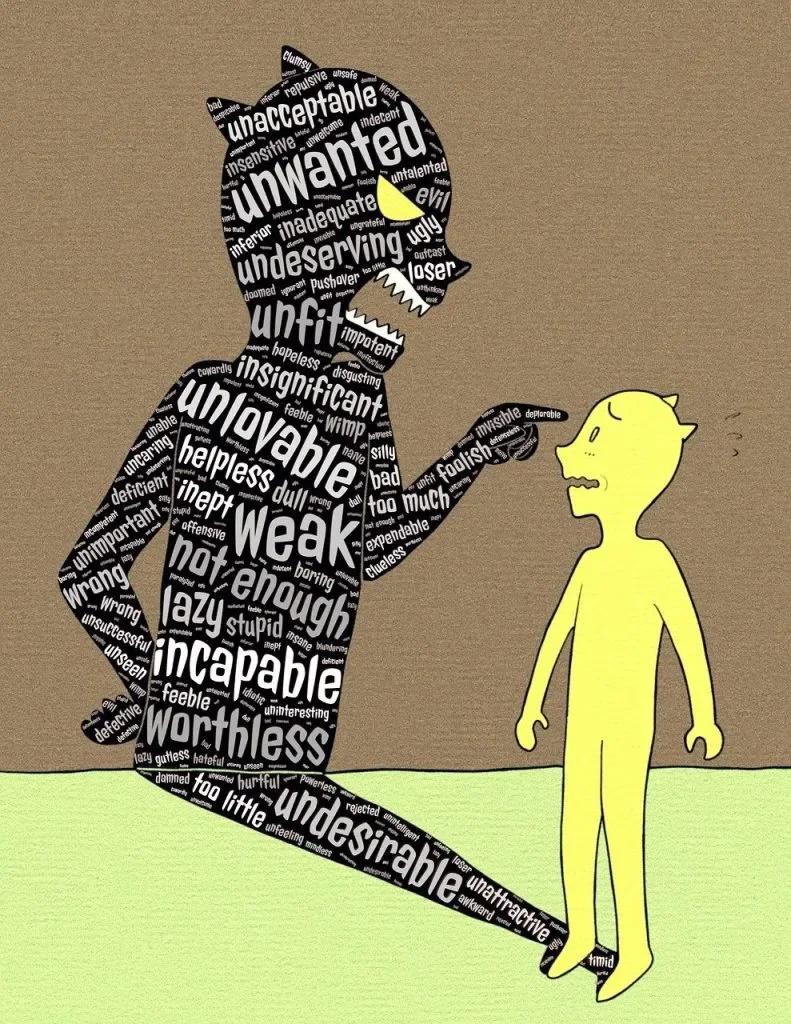
The Inner World of Shame: Why It Hurts, How It Shows Up, and How Healing Happens
If shame were obvious, people would name it easily.
But shame is sneaky. It disguises itself as overthinking, perfectionism, emotional shutdown, relationship anxiety, or the constant sense that you’re “too much” or “not enough.”
At its core, shame is not a character flaw.
It is an internalized relationship—a way you learned to see yourself through the eyes of others.
Psychoanalyst Michael Stadter describes shame as a system of inner dynamics: parts of you that judge, withdraw, demand, or attack—and parts of you that learned to carry that pain quietly. Understanding these dynamics helps us name what hurts and shows us how healing becomes possible.
The Pain Points: How Shame Shows Up in Real Life
Most people don’t walk into therapy saying, “I’m struggling with shame.”
They come in saying things like:
“I feel anxious all the time, even when nothing is wrong.”
“I’m exhausted from trying to be perfect.”
“I shut down in relationships—or cling too hard.”
“I don’t trust my emotions.”
“I feel defective, but I don’t know why.”
Shame often shows up as:
A Harsh Inner Voice
An internal critic that says:
“You should know better.”
“What’s wrong with you?”
“If people really knew you, they’d leave.”
This voice didn’t come from nowhere—it formed in response to criticism, disappointment, neglect, or conditional love.
Emotional Withdrawal or Numbing
For some, shame doesn’t shout—it goes silent.
You keep your needs small
You don’t ask for help
You feel invisible, disconnected, or emotionally flat
This often traces back to environments where your emotions weren’t noticed, welcomed, or responded to.
Perfectionism and Overfunctioning
Shame can also wear a high-achieving mask.
Feeling worthy only when you’re productive
Panic when you make mistakes
Identity tied to performance or being “the strong one”
Underneath this drive is often a fear that being ordinary means being unlovable.
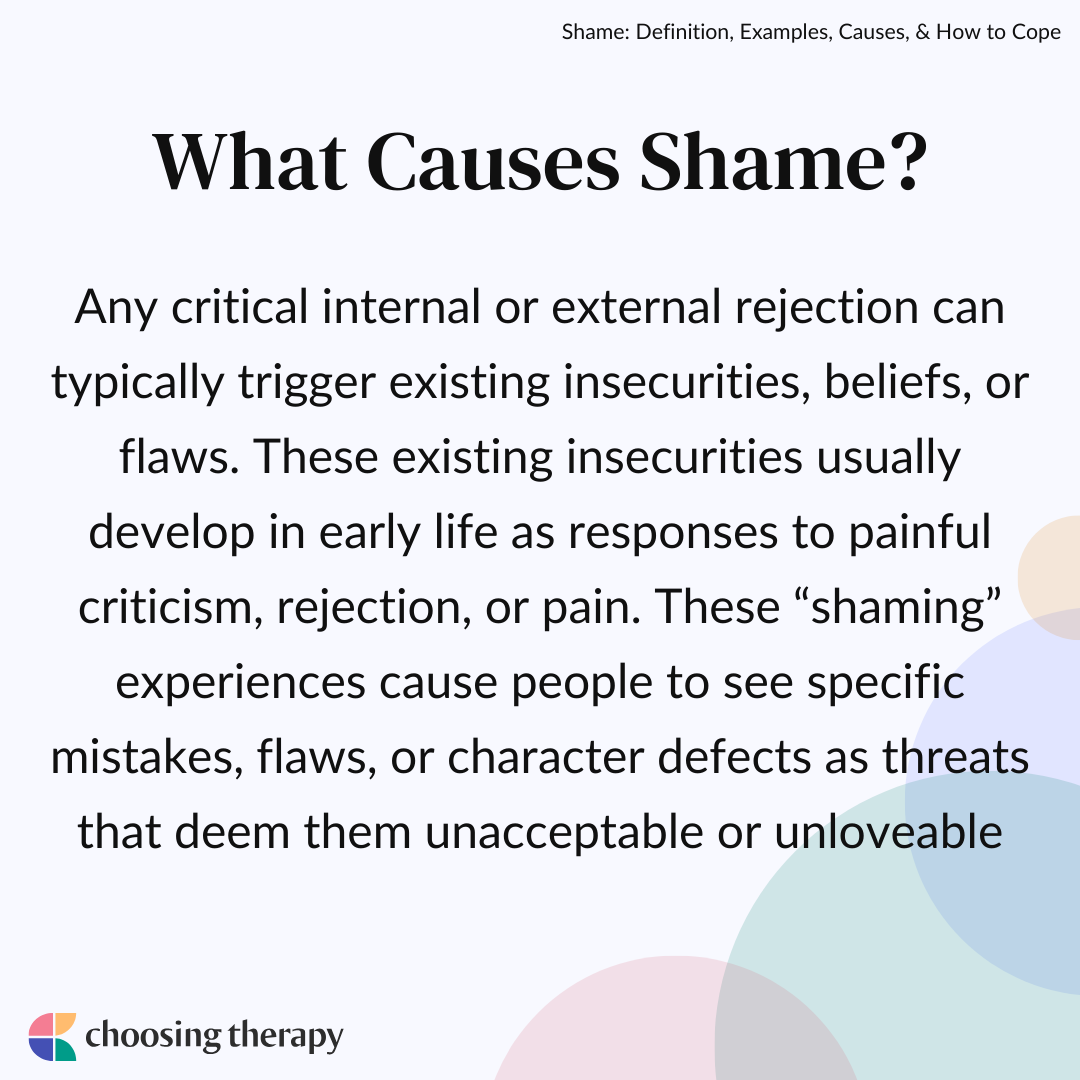
What Causes Shame from Choosing Therapy
Relationship Patterns That Repeat
Shame lives relationally—so it shows up most clearly in relationships:
Fear of abandonment
People-pleasing or self-erasing
Explosive reactions followed by regret
Staying too long in unhealthy dynamics
These patterns aren’t failures. They are survival strategies shaped by earlier relational pain.
The Solution: Working With Shame Instead of Fighting It
Shame does not heal through willpower, positivity, or “thinking differently” alone.
It heals through understanding, safety, and relational repair.
1. Naming the Shame Dynamic
Instead of asking “What’s wrong with me?” we ask:
Which inner voice is speaking?
What role did it once play?
What pain is it protecting?
This reduces self-blame and builds clarity.
2. Separating Identity From Survival
Many clients believe shame is who they are.
In therapy, we help you:
Differentiate your authentic self from learned shame responses
Recognize that these patterns made sense once—but may no longer serve you
Build an internal sense of worth that isn’t conditional
3. Creating New Internal Experiences
Healing shame requires more than insight—it requires felt safety.
Through trauma-informed, relational, and schema-based work, therapy becomes a space where:
Your emotions are met, not minimized
Your needs are acknowledged without judgment
New internal experiences replace old shaming ones
Over time, the inner world softens.
Why Work With Us
At Stafford & Associates Counseling Group, we specialize in working with the kinds of pain that don’t always have neat labels—especially shame rooted in relationships, trauma, attachment wounds, and chronic self-criticism.
What Makes Our Work Different
✔ Depth-Oriented, Trauma-Informed Care
We don’t just manage symptoms—we explore where patterns came from and how to change them safely.
✔ Schema & Attachment-Based Approach
We help clients understand their inner dynamics, relational patterns, and emotional triggers in a way that feels empowering—not pathologizing.
✔ Compassion Without Coddling
We balance empathy with clarity, helping you build insight and real-world change.
✔ Specialization in Relational & Identity-Based Pain
Including betrayal trauma, narcissistic relational dynamics, emotional neglect, perfectionism, and chronic shame.
✔ A Space Where You Don’t Have to Perform
You don’t have to be “good,” “strong,” or “put together” here. You just have to show up.
Healing Is Possible—even If Shame Feels Like Home
Shame convinces people they are the problem.
Therapy helps you see the truth: the problem was what you had to adapt to.
When shame is understood as a learned internal relationship—not an identity—it can loosen its grip. And from there, something new can grow: self-trust, emotional freedom, and relationships that no longer revolve around fear.
If you’re ready to begin that work, we’re here to help.